Hello, I am a blogger dedicated to deepening our reading experiences. Today, I want to reflect on a novel that reaches into the most vulnerable corners of the human heart—Human Acts by Han Kang.
Through this powerful work, we explore themes of human dignity, suffering, and the solidarity we so often choose to ignore.
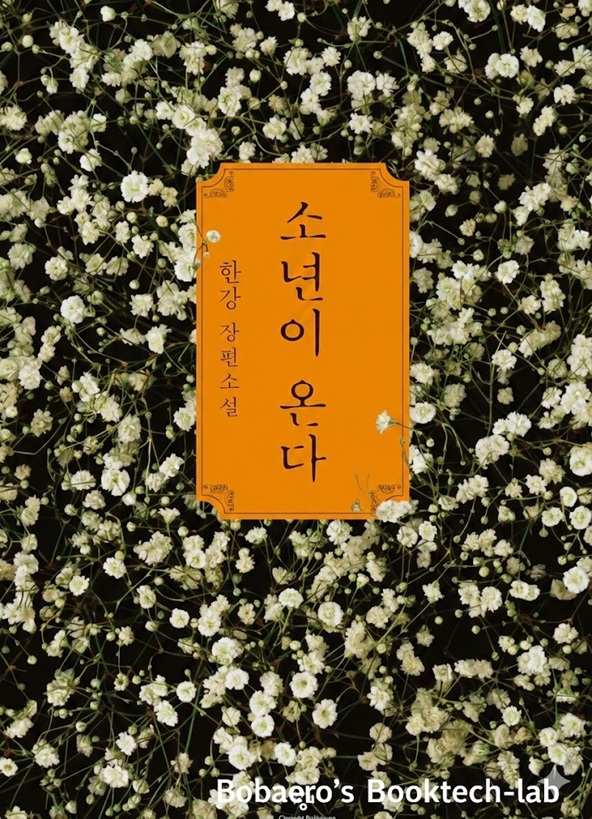
Introduction: Why Do We Pause Before the Pain of Others?
On an ordinary Tuesday afternoon, have you ever glanced at tragic news, murmured, “That’s terrible,” and then immediately returned to planning your dinner?
We live in an age where consuming the suffering of others has become almost routine. Yet sometimes a sudden thought unsettles us:
What if that pain were mine? What if those were the final moments of someone I love?
Human Acts begins at precisely that point of discomfort.
Set in Gwangju during the pro-democracy uprising of May 1980, the novel follows the gaze of a young boy named Dong-ho. He wanders among coffins laid out in a cold gymnasium, carefully numbering the bodies of the dead. Through his eyes, our desensitized daily lives are abruptly awakened. What we often dismiss as distant “events” becomes something intimate and unbearably real.
This novel is not merely a historical record. It is a desperate hand reaching out from wounded souls, asking to be remembered.
What Proves Our Humanity?
The perspective that pierces through this novel is clear:
Human dignity may be shattered, but it can never be erased.
Han Kang does not turn away from the brutal destruction of the human body. She describes it with quiet, unflinching clarity. Yet alongside that devastation, she calls forth the souls of those who, until their final moments, worried about others and struggled to remember the dead with care.
In the face of violence that sought to reduce human beings to something less than animals, the novel paradoxically reveals how profoundly sublime a human being can be.
The more dignity is crushed, the more radiant it becomes.
The Weight of Our Relationships
In our professional and social lives, we are often encouraged to make “efficient” choices. We operate according to the logic of: As long as it’s not me.
To avoid loss, we distance ourselves.
To protect our comfort, we ignore another’s grief.
But the relationships depicted in this novel ask us a piercing question:
Are you willing to make space for someone else, even at a cost?
In a world where money and success dominate as ultimate values, Human Acts reminds us that the emotional solidarity we have lost may be the very foundation of our humanity.
Perhaps true wealth is not measured by a bank balance, but by the breadth of a heart capable of resonating with the sorrow of others.
My Interpretation: Why I Struggled with Dong-ho’s Choice
To be honest, when I first read the novel, I struggled to understand Dong-ho’s decision.
My cold, pragmatic instincts took over.
Why didn’t he run?
Wouldn’t it have been wiser to survive and wait for another chance?
It seemed reckless for a middle school boy—one who could barely hold a weapon—to remain behind when death felt inevitable.
But by the time I closed the book, something within me had shifted.
Dong-ho did not simply choose death.
He chose the pain of preserving dignity together over the guilt of surviving alone.
The moment I understood that choice—choosing an upright disappearance over a cowardly survival—my internal calculations fell silent. Dong-ho shattered my arrogant logic and reminded me that there exists a form of moral integrity far more important than efficiency.
A Small Daily Practice
If this novel leaves us with anything, perhaps it is this:
- Check in on someone near you. Ask, “Was today difficult for you?”
- Listen to forgotten voices. Read about marginalized people all the way to the end instead of scrolling past.
- Create a small space for memory. Record the sorrow of someone you encountered today in a brief note or reflection.
Solidarity does not begin with grand gestures.
It begins with attention.
Closing: Is Your Soul at Peace?
Through this novel, Han Kang seems to ask us:
Do you believe in the morality of the crowd?
What, in the end, is a human being?
We may all be passing through our own version of “May.” In lives where we are sometimes trampled and sometimes ignored, what is the one thing we must never let go of?
Are you willing to pause today before someone else’s sorrow?
And most importantly—
Is your soul at peace?