Hello, fellow seekers of meaningful literature.
Today, I want to reflect on The Vegetarian by Han Kang, the internationally acclaimed novelist and Nobel Prize laureate. This is not merely a story about a woman who stops eating meat. It is a disturbing meditation on human dignity, internal violence, and the radical act of refusal.
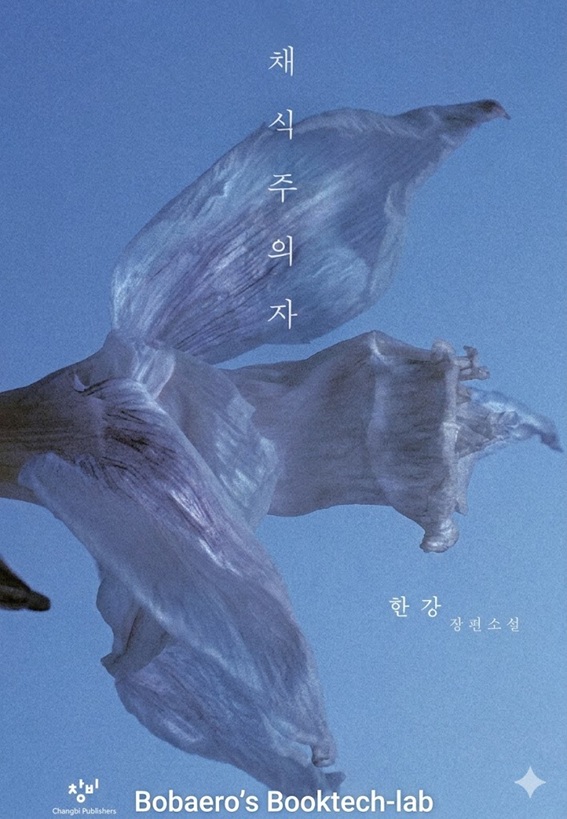
The Weight of “Why Can’t You Just Be Normal?”
In your professional life or at family gatherings, have you ever heard phrases like:
“If you just endure it, everyone will be happy.”
“Why do you have to make things difficult?”
Within the system we call society, we are often required to wear the uniform of “normalcy.” But what happens when that uniform begins to suffocate you?
The protagonist, Yeong-hye, decides to stop eating meat after a haunting dream. At first glance, it appears to be a small, private decision. Yet it immediately fractures the fragile harmony of her family.
For those of us who quietly shave away parts of ourselves to fit the expectations of others, Yeong-hye’s radical refusal feels both horrifying and strangely liberating.
Resistance Through Refusal
At its core, this novel explores the desperate attempt to preserve purity in a violent world.
Patriarchal control, social labels, bodily dominance—these forces converge around Yeong-hye. The act of eating meat becomes a symbol of participation in a system built upon consumption and harm.
Her decision to reject meat is not presented merely as a symptom of illness. It can also be read as an attempt to withdraw from a humanity that survives by harming others.
By refusing to consume violence, she becomes violence’s target.
And yet, in her refusal, there is an undeniable dignity.
Reclaiming the Right to Choose
How many illusory choices do we make each day?
We adapt our preferences to match a manager’s lunch selection.
We choose careers shaped more by parental expectations than by desire.
We silence discomfort in order to maintain fragile harmony.
The Vegetarian asks a quiet but devastating question:
Is your decision truly yours, or is it the result of surrendering to the expectations imposed upon you?
Yeong-hye’s vegetarianism becomes a ripple in the social fabric. Sometimes, instead of sacrificing your soul to preserve a relationship, you must endure the discomfort of that relationship in order to preserve yourself.
True wealth may not lie in money or achievement, but in the sovereignty you hold over your own life.
Beyond the Visible Violence
When I first read this novel, I was overwhelmed by anger toward the husband, the brother-in-law, and especially the father. The scene in which the father attempts to force meat into Yeong-hye’s mouth remains one of the most disturbing moments in the book.
But upon rereading, my focus shifted to her sister, In-hye.
I began to see that In-hye’s quiet endurance mirrors many of us. While Yeong-hye erupts, In-hye slowly burns out. She continues functioning, surviving, maintaining order—while suppressing her own sorrow.
Now, instead of asking, “Why does she live so suffocatingly?” I find myself wanting to gently hold her exhausted hands.
A Small Practice of Refusal
If this novel offers us anything, perhaps it is this:
- Practice saying “No.” Politely but firmly decline one request today that does not align with your inner convictions.
- Reclaim your senses. During one meal, put away your phone and attend fully to taste, texture, and presence.
- Sit in silence for ten minutes. Step away from other voices and ask yourself what you truly desire.
Resistance does not always roar.
Sometimes, it simply refuses.
Closing: What Are You Dreaming?
Yeong-hye dreams of becoming a plant—sustained only by sunlight and water. Even if that dream leads to her destruction, it is her attempt at salvation.
Perhaps each of us carries an internal tree—a longing to exist in our most unguarded, authentic form rather than the version shaped by expectation.
What is the purest desire you are suppressing today?
What is your own quiet act of “vegetarianism”—the refusal that might set you free?